Humvee Reference
Reference archive

Humvee
Reference

56 variants, 286 photos with credits and 9 spec tables.

Browse by series

Featured photos

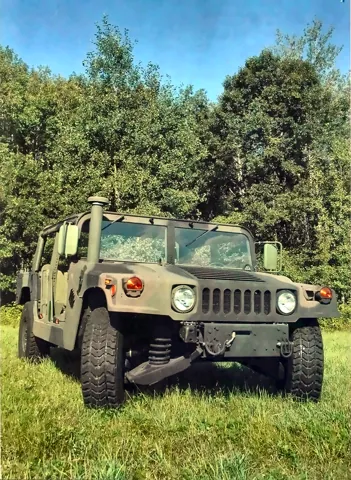
The cargo/troop carrier, in this case as the M1038 winch-equipped variant, is considered to be the base vehicle of the Humvee family.
The cargo/troop carrier, in this case as the M1038 winch-equipped variant, is considered to be the base vehicle of the Humvee family. This example has been set up in the four-door configuration, albeit the doors and the cargo cover are not fitted.
Photo: David Doyle · page 6 · p006-img01
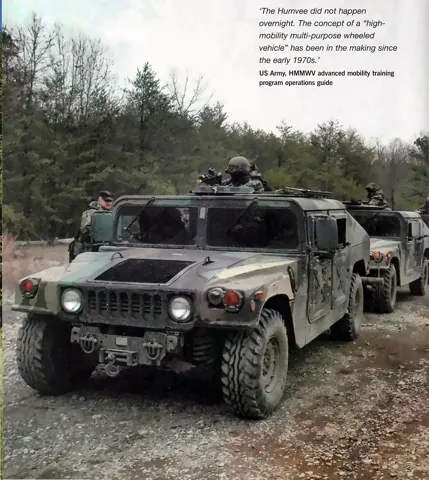
US Air Force airmen preparing for a run during convoy training at Fort Dix, New Jersey, March 2007.
US Air Force airmen preparing for a run during convoy training at Fort Dix, New Jersey, March 2007. The lead vehicle is a winch-equipped M1026 armament carrier.
Photo: US Department of Defense · page 8 · p008-img01
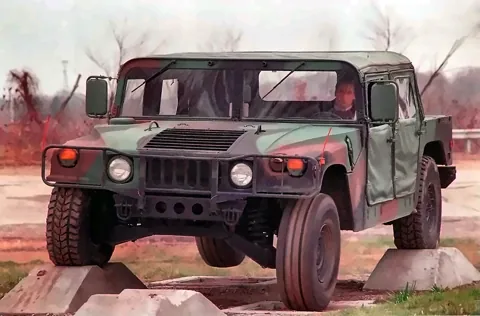
Despite having two wheels clear of the ground, this four-door M998 cargo/troop carrier demonstrates that plenty of traction is still…
Despite having two wheels clear of the ground, this four-door M998 cargo/troop carrier demonstrates that plenty of traction is still available.
Photo: AM General · page 9 · p009-img01
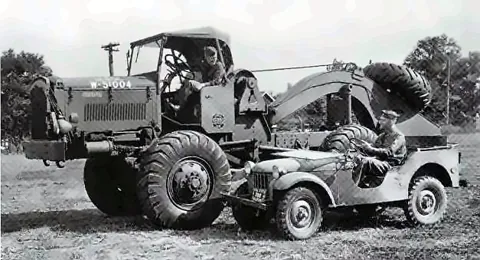
Where it all began!
Where it all began! In 1940 the US Quartermaster Corps asked the US motor industry to develop a small four-wheel-drive utility vehicle. American Bantam delivered their prototype for trials in September 1940, and subsequently constructed 70 pre-production versions of what was described as the BRC-60.
Photo: David Doyle · page 10 · p010-img01
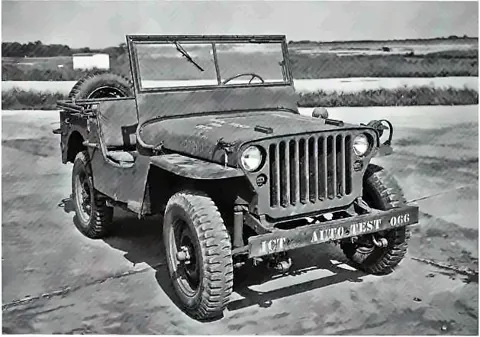
By November 1941 American Bantam was out of the picture.
By November 1941 American Bantam was out of the picture. Over the next four years, Ford and Willys-Overland constructed a total of 639,245 ‘standardised’ Jeeps between them; Ford’s contribution was 277,896 examples of the GPW, whilst Willys built 361,349 examples of the MB.
Photo: US Signals Corp · page 10 · p010-img04
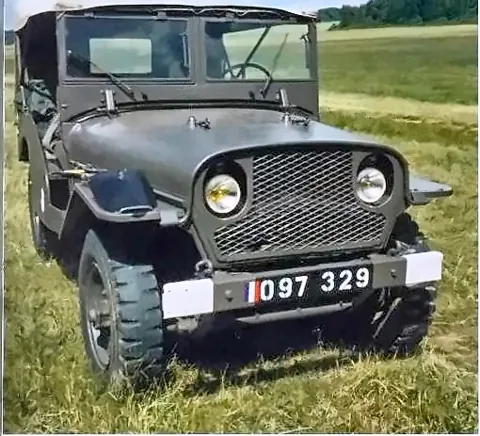
By the end of the 1940s, most European nations had plentiful supplies of American Jeeps.
By the end of the 1940s, most European nations had plentiful supplies of American Jeeps. Believing that the original design could be bettered, the French Delahaye company came up with the VLR-D, featuring independent suspension by torsion bar and a dry-sump engine. It was not a success.
Photo: Warehouse Collection · page 11 · p011-img01